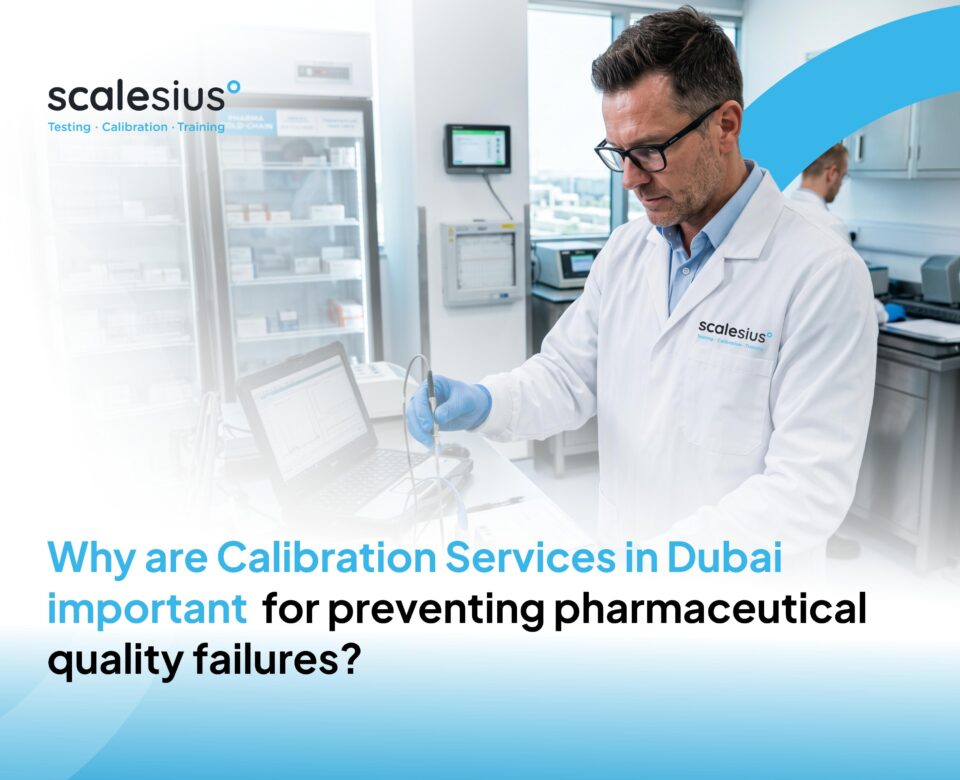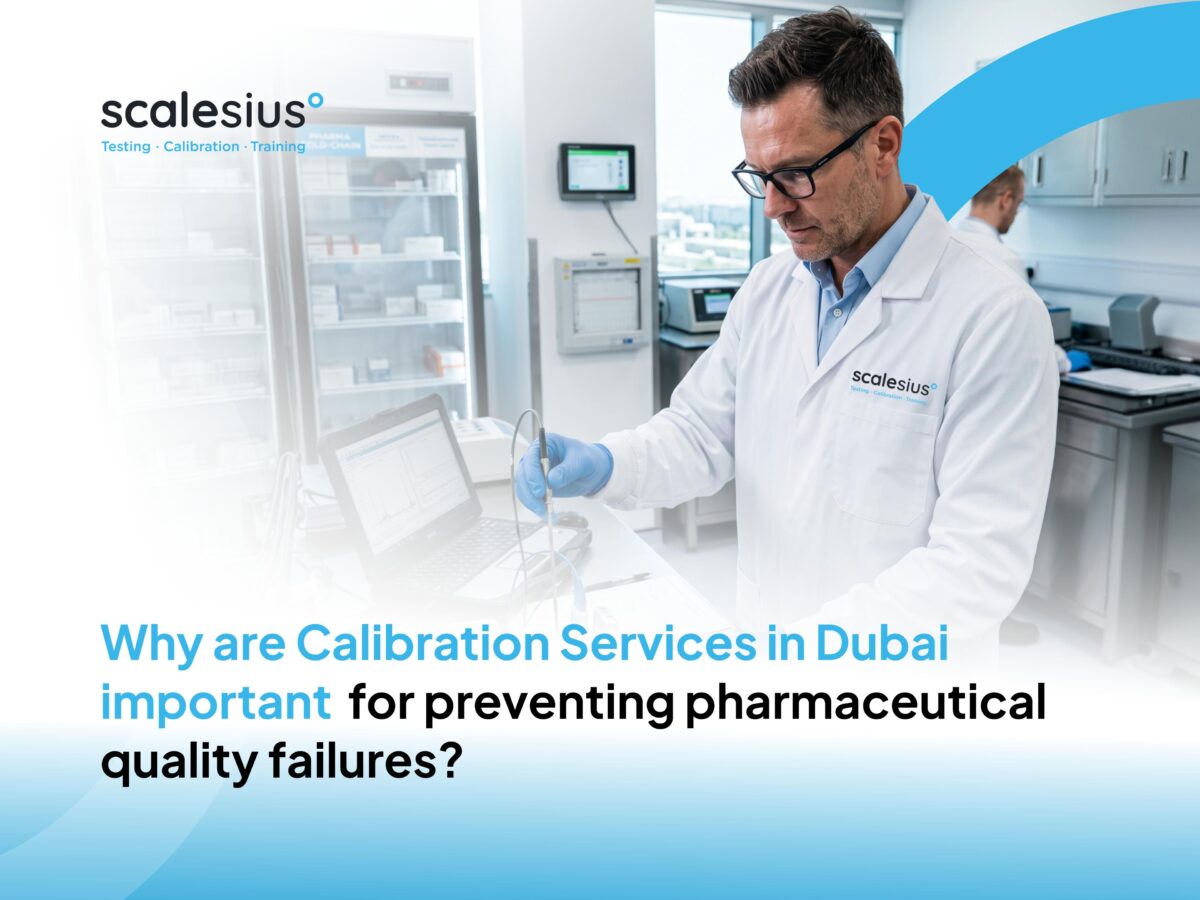



Why are Calibration Services in Dubai important for preventing pharmaceutical quality failures?
June 10, 2026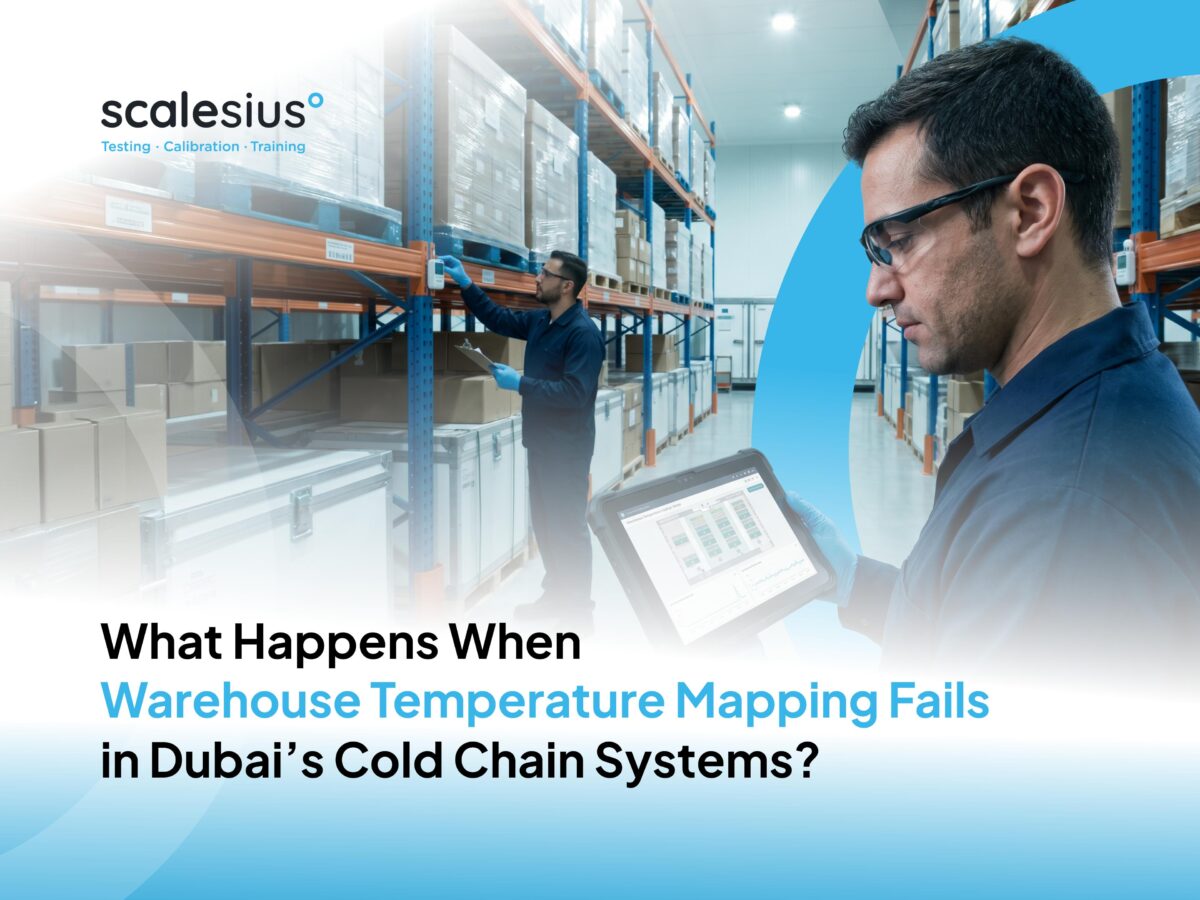
What if the biggest warehouse risk is the one you can't see?
Hidden temperature variations threaten pharmaceutical products before alarms are triggered. Especially in Dubai's climate it's critical to identify thermal blind spots in warehouses. This blog from Scalesius explains our service of temperature mapping in Dubai. We help businesses protect product quality throughout by maintaining compliance and reducing risk.
Every warehouse has its own costs. Some are easy to see.
Factors like HVAC maintenance, energy consumption and operational expenses appear on audits and budgets. Some costs remain hidden until a bigger problem arises.
This can be a diversion of temperature that nobody notices or heat pockets forming above a storage rack. An asymmetry of air-flow that happens near the loading bay. These are thermal blind spots. In pharmaceutical warehousing, they can turn out to be very expensive. The challenge becomes even greater in Dubai. Summer temperatures regularly exceed 45°C, while coastal humidity levels can approach 90% (uaeshelving.com). Refrigerated pharma products must not be placed under 2°C. Likewise it must not exceed 8°C (pmc.ncbi.nlm.nih.gov). This gives operators only a narrow 6°C window before product quality may be affected.
Assumptions shouldn't be made in such conditions. It may turn out to be costly and lead to further damage. A warehouse can have continuous monitoring in place with chiller rooms and dehumidification systems and could still experience localised environmental variations. Risks like these can remain undetected without a clear inspection of how temperature behaves throughout the warehouse. As a result warehouse temperature mapping in Dubai is an operational practice rather than a routine obligation.
Scalesius, with detailed thermal profiling, environmental qualification studies and validation methodologies helps businesses identify hidden vulnerabilities. Our expert team aims to address and rectify what's wrong before product integrity or operational performance is affected. Because when thermal blind spots remain invisible, the cost is rarely measured in temperature alone.
This can be a diversion of temperature that nobody notices or heat pockets forming above a storage rack. An asymmetry of air-flow that happens near the loading bay. These are thermal blind spots. In pharmaceutical warehousing, they can turn out to be very expensive. The challenge becomes even greater in Dubai. Summer temperatures regularly exceed 45°C, while coastal humidity levels can approach 90% (uaeshelving.com). Refrigerated pharma products must not be placed under 2°C. Likewise it must not exceed 8°C (pmc.ncbi.nlm.nih.gov). This gives operators only a narrow 6°C window before product quality may be affected.
Assumptions shouldn't be made in such conditions. It may turn out to be costly and lead to further damage. A warehouse can have continuous monitoring in place with chiller rooms and dehumidification systems and could still experience localised environmental variations. Risks like these can remain undetected without a clear inspection of how temperature behaves throughout the warehouse. As a result warehouse temperature mapping in Dubai is an operational practice rather than a routine obligation.
Scalesius, with detailed thermal profiling, environmental qualification studies and validation methodologies helps businesses identify hidden vulnerabilities. Our expert team aims to address and rectify what's wrong before product integrity or operational performance is affected. Because when thermal blind spots remain invisible, the cost is rarely measured in temperature alone.
When “Complete Mapping” Still Misses Critical Heat Zones in Dubai Pharma Warehouses
Many pharmaceutical facilities still believe that if a mapping study is completed, then environmental risks are eliminated. That is not the case every time.
A warehouse is a dynamic environment. Patterns of the airflow can change suddenly, and storage densities can fluctuate. The loading operations can introduce external heat factors, while HVAC performance varies under different thermal loads. As a result, environmental conditions behave very differently from one area to another. This is where the price of thermal blind spots begins.
Compliance starts before operations begin
Temperature mapping is a regulatory expectation that all facilities in the UAE have to follow. GDP guidelines require warehouses to conduct precise temperature mapping before they start operating. The objective is to identify any hot and cold spots inside to protect the integrity of pharma products. Additionally, it is also used to justify the permanent placement of the environmental points for monitoring.
Thermal stratification creates hidden risks
Temperature does not distribute evenly throughout a warehouse. It may be different for various parts of the premise. Warm air rises and creates a phenomenon called thermal stratification. This is why upper rack locations have different temperatures from lower storage ones. Hence, without a proper distribution study, these remain unnoticed.
Compliance starts before operations begin
Temperature mapping is a regulatory expectation that all facilities in the UAE have to follow. GDP guidelines require warehouses to conduct precise temperature mapping before they start operating. The objective is to identify any hot and cold spots inside to protect the integrity of pharma products. Additionally, it is also used to justify the permanent placement of the environmental points for monitoring.
Thermal stratification creates hidden risks
Temperature does not distribute evenly throughout a warehouse. It may be different for various parts of the premise. Warm air rises and creates a phenomenon called thermal stratification. This is why upper rack locations have different temperatures from lower storage ones. Hence, without a proper distribution study, these remain unnoticed.
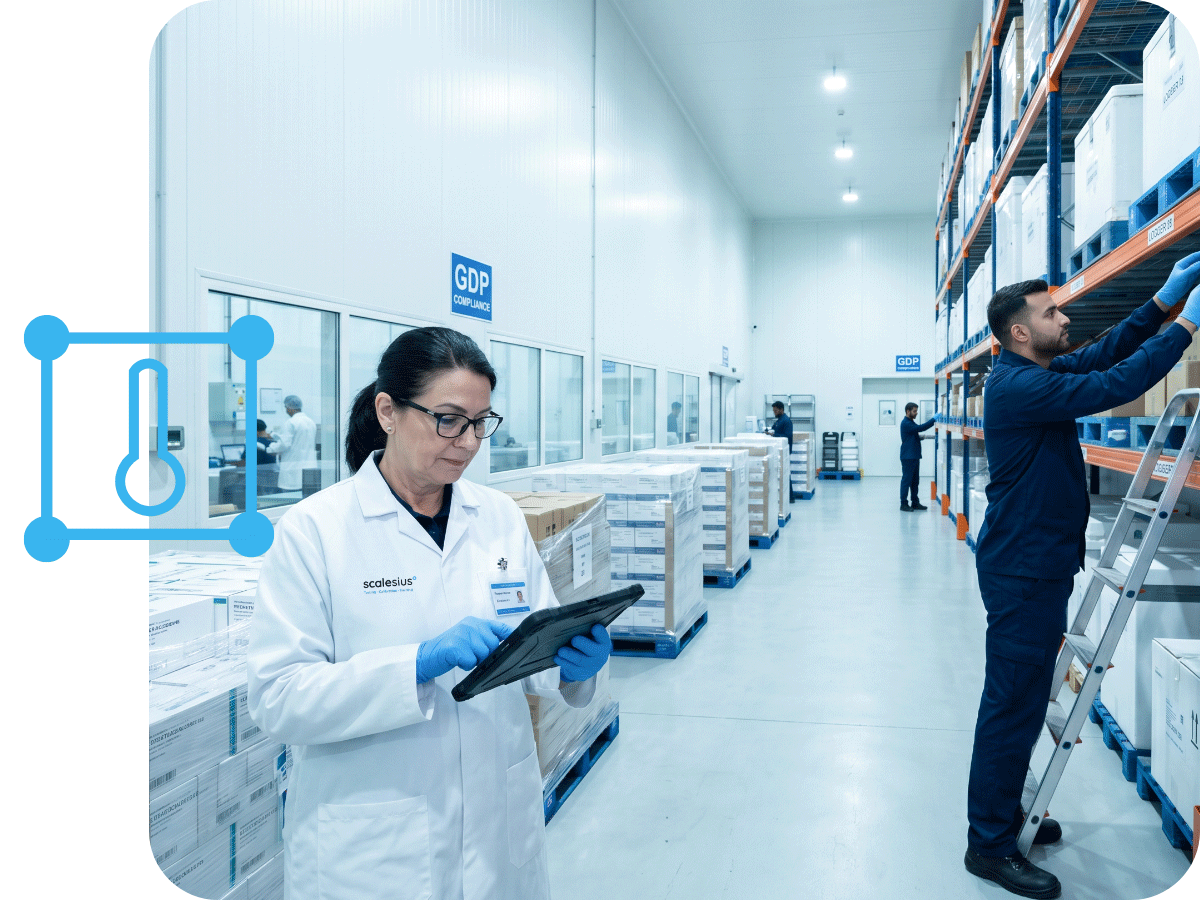
A warehouse may perform during controlled testing conditions. Repeated door openings and ongoing inventory handling can disrupt consistent temperature distribution. To address these variations, Scalesius performs studies based on mapping under operating conditions.
Precision requires reliable data
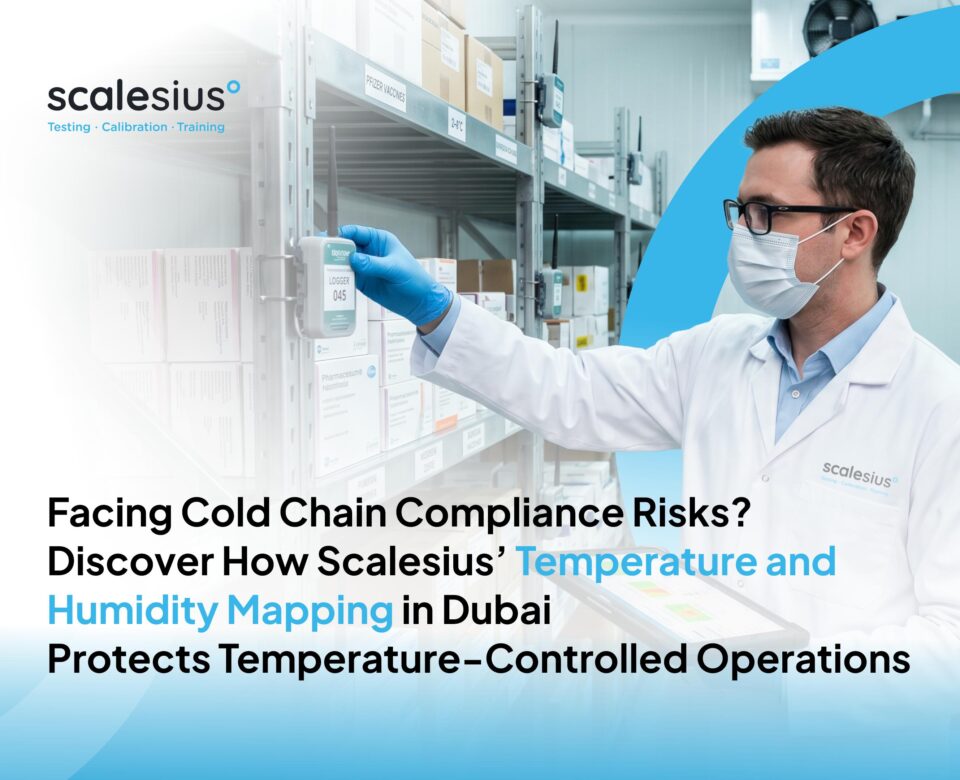
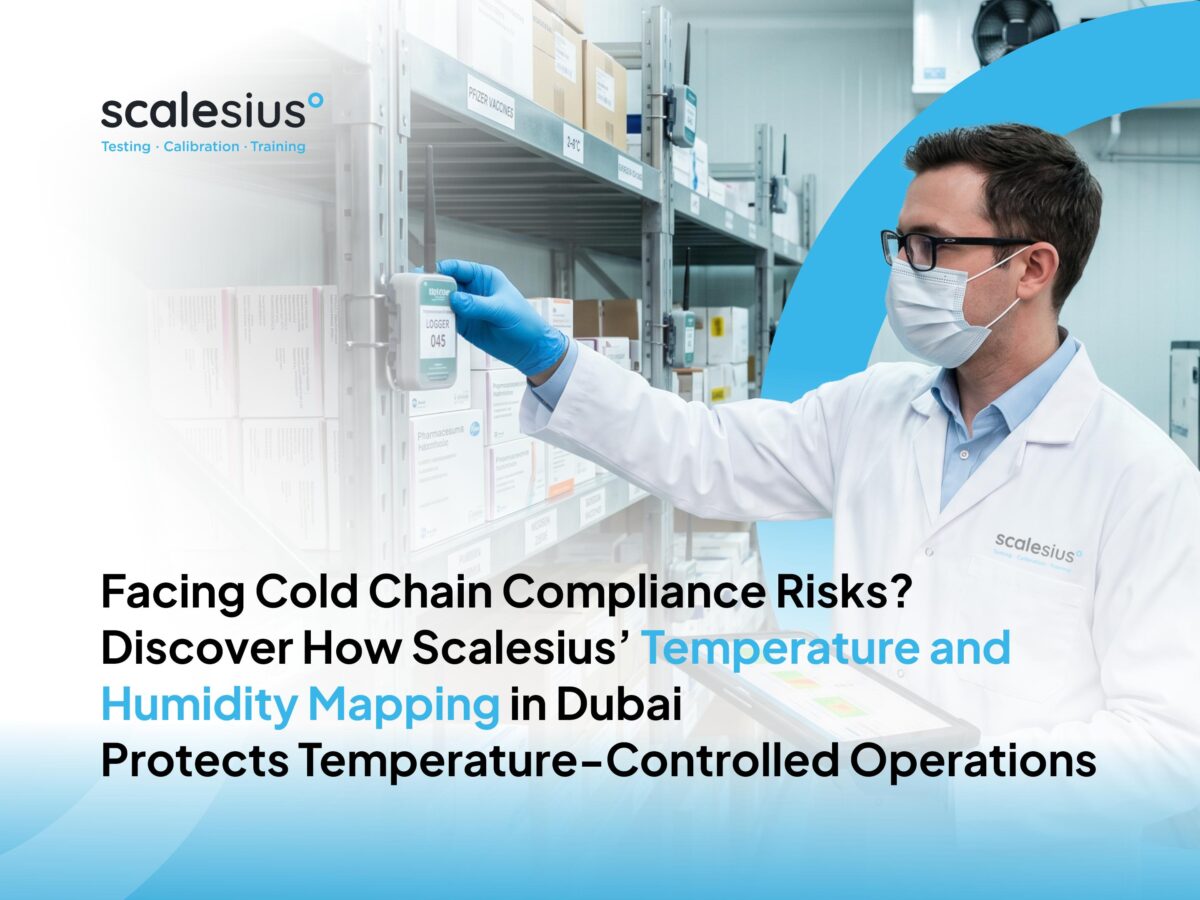
Scalesius uses data loggers for temperature mapping to create a sensor matrix. They are positioned across the warehouse. Each temperature data logger contributes valuable insights. These include temperature stability, thermal recovery time and airflow behavior. <
All the monitoring equipment undergoes routine temperature calibration with Scalesius. This helps maintain confidence in the result while ensuring calibration traceability and dependable data.
Precision requires reliable data
Scalesius uses data loggers for temperature mapping to create a sensor matrix. They are positioned across the warehouse. Each temperature data logger contributes valuable insights. These include temperature stability, thermal recovery time and airflow behavior. <
All the monitoring equipment undergoes routine temperature calibration with Scalesius. This helps maintain confidence in the result while ensuring calibration traceability and dependable data.
Keep your pharma warehouse efficient and compliant with our temperature mapping service. Drop a call at +971 4272 1561 to get in touch. Email us at hello@scalesius.com.
The Future of Precision Temperature Mapping in Dubai’s Pharma Ecosystem with Scalesius
Vaccines, biologics, specialty medicines and other temperature sensitive products require stricter environmental control. Likewise, pharmaceutical supply chains are becoming much more demanding in 2026. As storage requirements become more precise, warehouse validation methods must evolve accordingly.
Temperature mapping cannot be treated as just a one time activity completed to satisfy compliance requirements. Instead, it must be treated as an ongoing strategy that helps reduce risk and protect product quality.
Mapping is not a one-time exercise.
One of the key principles Scalesius follows is that warehouse performance should not be judged by a single study done years ago. Warehouses evolve continuously. The HVAC systems get upgraded and storage layouts change. The volumes of inventory fluctuate over time as operational practices develop. As a result of all these shifts, environmental conditions also change.
From environmental data to validation confidence, a Scalesius mapping study delivers more than environmental measures. For pharmaceutical companies, the real value of temperature mapping lies in verifying the environmental conditions are functioning as expected. It gives confidence that the storage conditions remain suitable for pharma products both now and in the future. Additionally, quality teams would have the proper evidence needed to support audits and inspections.
This becomes particularly important for Dubai's climate. Many refrigerated pharmaceutical products are stored between 2°C and 8 °C. This leaves very little room for variations, meaning even the smallest temperature diversions can affect product quality. The consequences are severe - biologics like insulin can lose 30–80% potency [plumsense.com].
For pharmaceutical businesses, the true value of temperature mapping is found in the documentation and confidence it provides.
Temperature mapping cannot be treated as just a one time activity completed to satisfy compliance requirements. Instead, it must be treated as an ongoing strategy that helps reduce risk and protect product quality.
Mapping is not a one-time exercise.
One of the key principles Scalesius follows is that warehouse performance should not be judged by a single study done years ago. Warehouses evolve continuously. The HVAC systems get upgraded and storage layouts change. The volumes of inventory fluctuate over time as operational practices develop. As a result of all these shifts, environmental conditions also change.
From environmental data to validation confidence, a Scalesius mapping study delivers more than environmental measures. For pharmaceutical companies, the real value of temperature mapping lies in verifying the environmental conditions are functioning as expected. It gives confidence that the storage conditions remain suitable for pharma products both now and in the future. Additionally, quality teams would have the proper evidence needed to support audits and inspections.
This becomes particularly important for Dubai's climate. Many refrigerated pharmaceutical products are stored between 2°C and 8 °C. This leaves very little room for variations, meaning even the smallest temperature diversions can affect product quality. The consequences are severe - biologics like insulin can lose 30–80% potency [plumsense.com].
For pharmaceutical businesses, the true value of temperature mapping is found in the documentation and confidence it provides.
The outputs of a Scalesius temperature mapping service are
Warehouse qualification
You are provided with evidence that the environmental conditions within your storage units have been assessed and perform within acceptable limits.
Audit readiness
Structured reports that help quality teams demonstrate compliance for your warehouses during review.
Environmental monitoring programs
Proper recommendations for the environmental monitoring point (EMP) placement based on the temperature behavior inside the warehouse.
Long-term risk management
A clearer and customized understanding of the warehouse's environmental trends. This helps businesses identify and address risks proactively before they affect the products.
Building confidence in every storage zone
Our system provides businesses with continuous visibility into critical storage areas. This, combined with a robust temperature monitoring system, will enable businesses to predict environmental changes early. It helps them take corrective action before any product integrity starts to deteriorate.
Another one of the benefits that you get from temperature mapping is the level of accuracy. Our team understands how accurate we have to be while temperature mapping and identifying the hot and cold zones. It is very important to determine the effectiveness of the systems present in the warehouse.
Hence, our temperature calibration services help maintain dependable data over time.
Scalesius's approach for temperature monitoring strengthens compliance and improves operational consistency. As the expectations of the pharma industry evolve the focus transitions from just recording temperatures to proving that you can constantly protect pharmaceutical products.
This objective sits at the core of every Scalesius temperature mapping study done in Dubai.
You are provided with evidence that the environmental conditions within your storage units have been assessed and perform within acceptable limits.
Audit readiness
Structured reports that help quality teams demonstrate compliance for your warehouses during review.
Environmental monitoring programs
Proper recommendations for the environmental monitoring point (EMP) placement based on the temperature behavior inside the warehouse.
Long-term risk management
A clearer and customized understanding of the warehouse's environmental trends. This helps businesses identify and address risks proactively before they affect the products.
Building confidence in every storage zone
Our system provides businesses with continuous visibility into critical storage areas. This, combined with a robust temperature monitoring system, will enable businesses to predict environmental changes early. It helps them take corrective action before any product integrity starts to deteriorate.
Another one of the benefits that you get from temperature mapping is the level of accuracy. Our team understands how accurate we have to be while temperature mapping and identifying the hot and cold zones. It is very important to determine the effectiveness of the systems present in the warehouse.
Hence, our temperature calibration services help maintain dependable data over time.
Scalesius's approach for temperature monitoring strengthens compliance and improves operational consistency. As the expectations of the pharma industry evolve the focus transitions from just recording temperatures to proving that you can constantly protect pharmaceutical products.
This objective sits at the core of every Scalesius temperature mapping study done in Dubai.
Conclusion
Temperature mapping is something that's equally important as what you know in pharmaceutical warehousing.
An uneven airflow, a hidden hotspot, or an unnoticed temperature variation can affect product quality before it gets noticed through routine monitoring.
Dubai's climate has extreme heat and humidity. This puts significant pressure on the temperature-controlled environments and the medicines.
Hence, understanding the realities that happen in every corner of the warehouse is a mandatory responsibility nowadays. This perspective is what is at the heart of every Scalesius study.
The goal is to help businesses see their storage environments with greater clarity. We don't just map temperatures. We help businesses make decisions with greater certainty prepare warehouses for greater operational demand.
When visibility improves, risk decreases. Scalesius, with its warehouse temperature mapping in Dubai removes hidden risks, making product quality easier to protect.
Dubai's climate has extreme heat and humidity. This puts significant pressure on the temperature-controlled environments and the medicines.
Hence, understanding the realities that happen in every corner of the warehouse is a mandatory responsibility nowadays. This perspective is what is at the heart of every Scalesius study.
The goal is to help businesses see their storage environments with greater clarity. We don't just map temperatures. We help businesses make decisions with greater certainty prepare warehouses for greater operational demand.
When visibility improves, risk decreases. Scalesius, with its warehouse temperature mapping in Dubai removes hidden risks, making product quality easier to protect.
FAQ
Why does warehouse temperature mapping matter for Dubai based pharma facilities?
Pharma warehouses n Dubai are operating in one of the region's most demanding climates where temperature deviations can take place even with proper cooling systems. This is how temperature mapping studies help your business. Our team at Scalesius detects such variations to make sure pharmaceutical products are stored in the right way.
Is it possible that temperature hazards are present in a warehouse despite its compliance with the standard?
A warehouse may seem to have met all its temperature requirements while still containing hot pockets or other issues. Scalesius conducts mapping studies to understand how environmental conditions behave and affect the facility.
Which areas of the pharmaceutical warehouse require the most attention?
In our experience the loading bays and upper rack levels are more prone to temperature deviations. The external wall sections and areas near the ventilation systems also require care. These locations can frequently experience different environmental fluctuations. Hence, these areas are prioritized during a temperature mapping study.
How often should warehouse temperature mapping be performed?
We recommend temperature mapping whenever major operational changes happen within the warehouse. This may include warehouse expansions, HVAC upgrades, or changes in storage practices. Environmental conditions can change over time. This is why assessments on temperatures within certain periods help maintain confidence in storage performance and during inspection.
What can businesses expect from a temperature mapping study?
We help businesses understand temperature readings and environmental conditions inside their warehouse. We identify the areas of concern and support the qualification activities needed to correct them. We also provide the documetation and validation evidence to proceed in their operational activities.