


Temperature &
Humidity Mapping in Dubai

Understanding Temperature And Humidity Mapping in Cold Chain
This is important for cold and humidity-sensitive facilities, wherein slight changes may affect pharmaceuticals, foods and other fragile products. Through analysing the data gathered, the business will have information regarding airflow conditions. Data on insulation effectiveness and equipment efficiency for the room is also available. Humidity mapping plays a role in guaranteeing stability within cold chain facilities. This is due to the fact that moisture levels affect the quality and safety of the products being stored.
Our mapping studies are made possible through our utilisation of state of the art calibration equipment, measuring devices and scientific methods. Cold chain firms are assured compliance preparation, operational consistency and environmental stability when they turn to us. Identifying risk zones early will help businesses optimise storage design. They can also strengthen monitoring systems and reduce product loss across regulated cold chain operations.
How Temperature Mapping Improves Your Cold Chain operations
Temperature and humidity mapping in Dubai provides clear insights that help businesses maintain compliance in manual storage conditions and reduce operational risks. As it demonstrate adherence to ISO, WHO GDP and MOH requirements, it can support audit readiness. Accurate environmental documentation and structured reporting can also be ensured with this.
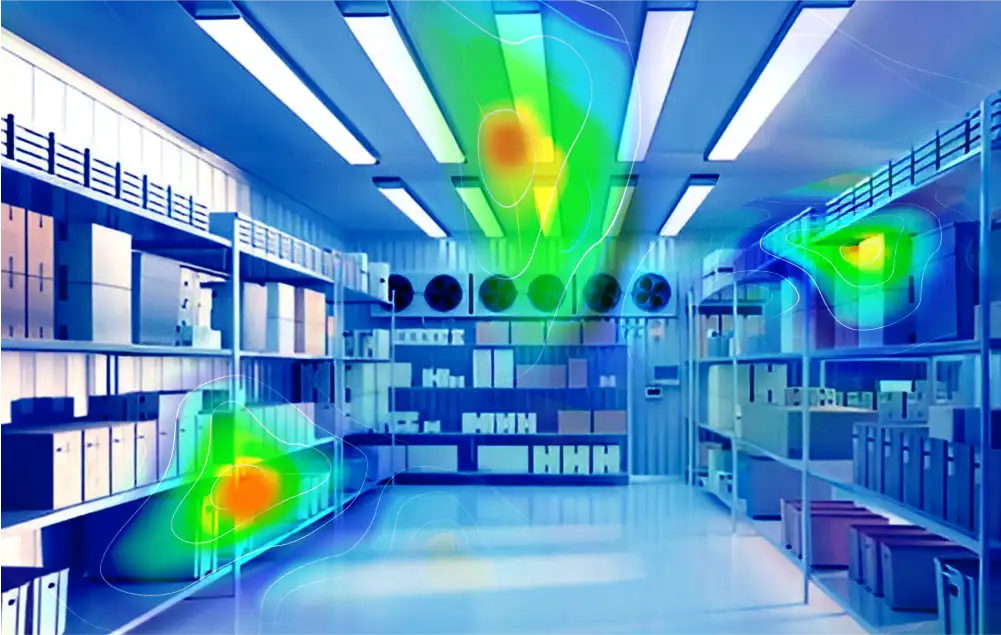
With this procedure, hot zones, cold spots and unstable areas can be identified. Cold Chain companies may also use seasonal mapping which allows them to prepare for any changes that occur due to different seasons. Seasonal mapping will help the company to adapt to changing climate conditions.

Scalesius utilises highly sophisticated warehouse temperature monitoring devices, thermal data logger systems and temperature humidity data logger instruments to determine the variation in humidity and temperatures in warehouses. This helps businesses implement better control measures. This way, there will be minimal product losses.
The detailed reports and actionable recommendations give businesses a complete knowledge of their environment. This enables better decision-making, stronger risk management and improved performance in temperature controlled storage and distribution operations.
Why Cold Chain Temperature Mapping Matters In Dubai
Freezer temperature monitoring and humidity evaluation are critical in those areas where small changes could affect product quality. The examination of temperature and humidity levels at locations helps cold chain companies identify discrepancies. These discrepancies might not be apparent in regular monitoring. A temperature map allows for understanding how air moves and is insulated in controlled temperature areas.
Environmental humidity level is another important factor for ensuring the quality of the product. This is due to the fact that too much or too little moisture can have an impact on the shelf life and safety of the product. Companies that engage in cold storage and have temperature and humidity mapping in Dubai can benefit from improved efficiency.
Scalesius assists companies with temperature mapping studies using calibrated equipment and proven methods. With our solutions you will be able to enhance monitoring and achieve regulatory compliance. If your objective is to sustain a stable environment in cold chain logistics despite harsh conditions, then Scalesius is the perfect fit for you.

Case Study :- Temperature &Humidity Mapping

How Scalesius Mapped Hidden Temperature and Humidity Variations in Biotech Storage?
Challenge -
A biotechnology facility in the UAE began recording intermittent temperature excursions during the periods of frequent loading and unloading. However, the fixed monitor sensor remained within a specific range. This raised concerns that localised temperature and humidity fluctuations were happening without being captured. The facility wanted Scalesius to map the environment and address the ways to fix it.
Solution -
As the initial step, Scalesius reviewed the storage room layout, access points, storage configuration, monitoring locations. The calibrated temperature and humidity data loggers were positioned across different areas and heights to map effectively. During this period, they continuously recorded temperature and humidity parameters. Our specialist analysed the data found for temperature gradients, humidity variations and hot and cold spots. This was then compiled into a mapping report with recommendations.
Outcome -
The mapping study gave the facility a picture of how loading and unloading affected temperature and relative humidity. Scalesius identified locations in the storage area that were prone to environmental variation. The report helped the facility review storage practices and the monitoring device placement. It also provided documented evidence of environmental conditions and a basis for maintaining consistent conditions.
Testimonials
What You Need to Know
Frequently Asked Questions
Improve your cold chain operations with temperature and humidity mapping solutions.
Ensure consistent equipment performance through expert calibration and testing support for temperature-controlled logistics environments.