

What happens when your cold chain sensors slowly lose accuracy?
Explore the importance of calibration, temperature mapping, and QA checks in maintaining reliable pharmaceutical monitoring data and supporting compliance in Dubai.
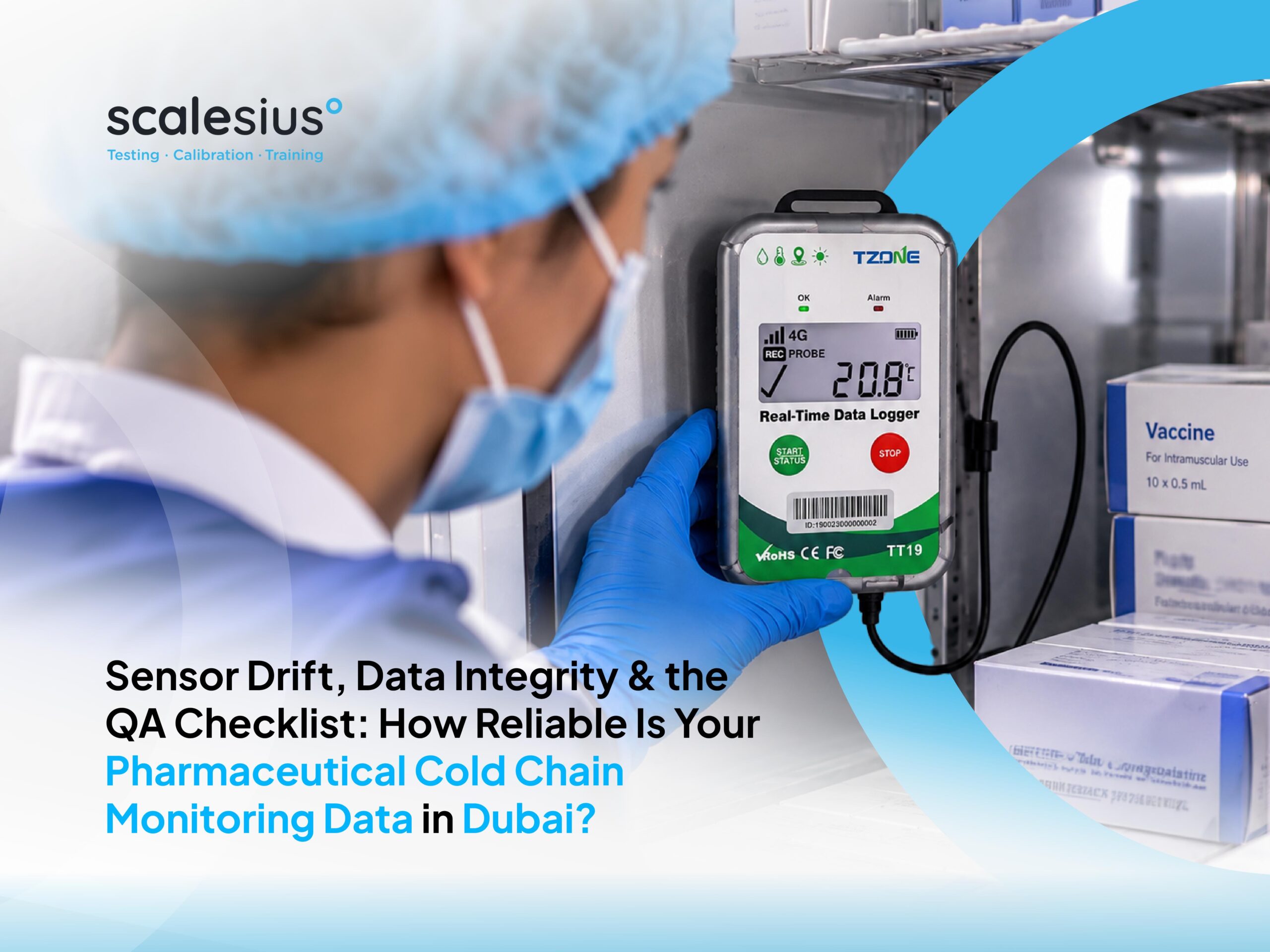
The most dangerous sensor in a Dubai cold room is the one that still looks fine. Its display is steady and its alarm quiet, but the readings might have slipped a few tenths of a degree since the last check. Pharmaceutical cold chain monitoring in Dubai depends on that trust, yet few teams ever test the sensor to prove that the reading is accurate.
This trust is getting expensive. Temperature-controlled logistics in the GCC carried a 15% premium before the Red Sea crisis and now carries 35%, which is roughly a 133% jump (Source: SCMDOJO).
Scalesius, as an expert calibration company in Dubai, has built a guide around the quality assurance checklist. Our team follows it throughout and ensures that your facility remains compliant with calibration over the long term.
When Accuracy Matters, Is Your Equipment Calibration Keeping Pace With Compliance?
Sensors rarely fail loudly. They age, and each type ages differently. For example -
- Platinum RTDs typically drift by less than 0.1°C per year.
- NTC thermistors are quick and affordable, but their stability decreases over time. They also may require calibration more often than normal.
- Capacitive humidity sensors drift over 0.25% to 0.5% RH per year.
(Source: Testo)
Compare this against UAE pharmaceutical transport compliance. This includes real-time digital temperature monitoring with ±0.5°C accuracy, tamper-proof tracking and documentation with comprehensive thermal mapping studies (Source: Manchu Transport). For example, a thermistor that has aged 0.3°C plus the uncertainty carried over from its last calibration can go against the reliability of results. Temperature measurement accuracy is something you prove, not something that you assume.
Imagine three sensors share a shelf in a 2°C to 8°C cold room and read 7.6°C, 7.7°C, and 7.8°C. At the same time, a reference thermometer reads 8.4°C. All three agree, and all three are wrong. Sensors of the same make and age can drift in step, so agreement is not accuracy. A traceable reference exposes that common-mode drift.
This comparison is what Scalesius does with its temperature mapping and monitoring services. Our team uses dry block calibrators and traceable reference standards to calibrate thermometers, data loggers, probes, humidity sensors, pressure gauges, and more on-site or in lab. We also document the measurements recorded before and after adjustments. Cold chain temperature monitoring then rests on evidence. Each reading is only as reliable as the last temperature sensor calibration behind it.
That calibration record is data integrity in practice. When an auditor asks how we know a reading is right, you show the calibration history, not just the chart. Scalesius helps you maintain calibration compliance with applicable standards.
Don’t Leave Sensor Accuracy to Assumption.
Get in touch with Scalesius for calibration, mapping, and monitoring support at +971 4272 1561 or hello@scalesius.com.
What Does a Validated Cold Chain Look Like With Scalesius’ Calibration Services?
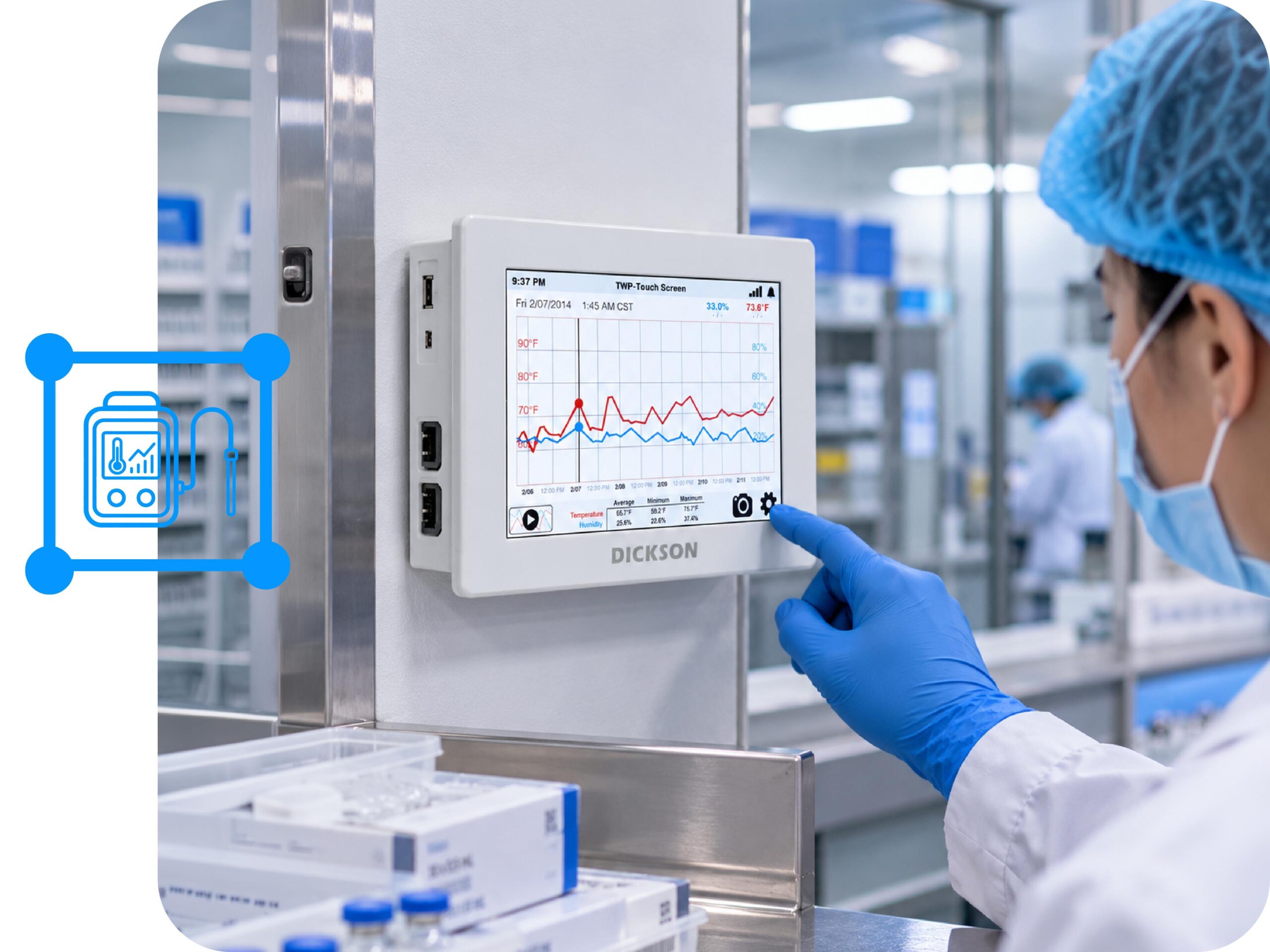
Every facility Scalesius works with goes through a customised six-step QA checklist, from the first instrument list to the final session.
Scope the instruments- The team lists every device that monitors or controls conditions affecting the product: thermometers, data loggers, probes, humidity sensors, pressure gauges, refrigerators, freezers and more.
Schedule around drift- Each instrument gets a custom calibration schedule based on its duty and operating conditions, with an annual check. This helps ensure that instruments are rechecked before significant drift develops.
Measure the drift - Using calibrators and traceable reference standards, Scalesius records how each device performs before any adjustment, which provides a documented baseline of its performance before adjustment.
Adjust and verify - After a performance evaluation, Scalesius adjusts equipment, working to certified procedures aligned to ISO 17025 calibration requirements. This is the standard ENAS, which the UAE's accreditation body uses to assess laboratories (Source: UAE Ministry of Industry & Advanced Technology).
Record - Scalesius documents the results, including a calibration certificate where applicable, so QA and auditors have a calibration history showing identified drift and corrective action.
Map, validate and train - Scalesius runs temperature and humidity mapping studies, including data logger validation across storage and transport environments. Pharmaceutical temperature mapping shows where hot and cold spots occur, so monitoring and calibration can focus there. Additionally, our workshops teach staff about compliance awareness, handling procedures, and monitoring best practices.
Scalesius delivers all six stages on-site and off-site, tailored to the facility. Sensors will still age, but you stop facing drift you didn't know about and your pharmaceutical cold chain monitoring in Dubai runs on proof instead of trust.
Bottom Line: We’ll Help Build a More Accurate, Traceable and QA-Ready Cold Chain
Most cold chain teams find out where their gaps are when someone else points them out. It may be a client supplier qualification visit, a quality agreement renewal, or a regulator's inspection. Scalesius reverses that order. Our specialists map and assesses your premises first, so you get to rectify your gaps beforehand.
The work is hands-on. Scalesius assesses your premises, examines how temperature and humidity are controlled and recorded, maps the space, and calibrates the instruments behind the data. Instead of coordinating a mapping contractor, a calibration vendor and more, your QA lead works with one team and gets findings that fit together.
Book a consultation with Scalesius and share
- what you store and at which temperature ranges
- How many sites and vehicles you run, which sensors and loggers you use
- When they were last calibrated and your premises were last mapped.
From there, Scalesius builds a customised solution for your premises with expert mapping and calibration services. This way, your pharmaceutical cold chain monitoring in Dubai holds up under any inspection.
Don’t Leave Sensor Accuracy to Assumption.
Get in touch with Scalesius for calibration, mapping, and monitoring support at +971 4272 1561 or hello@scalesius.com.