



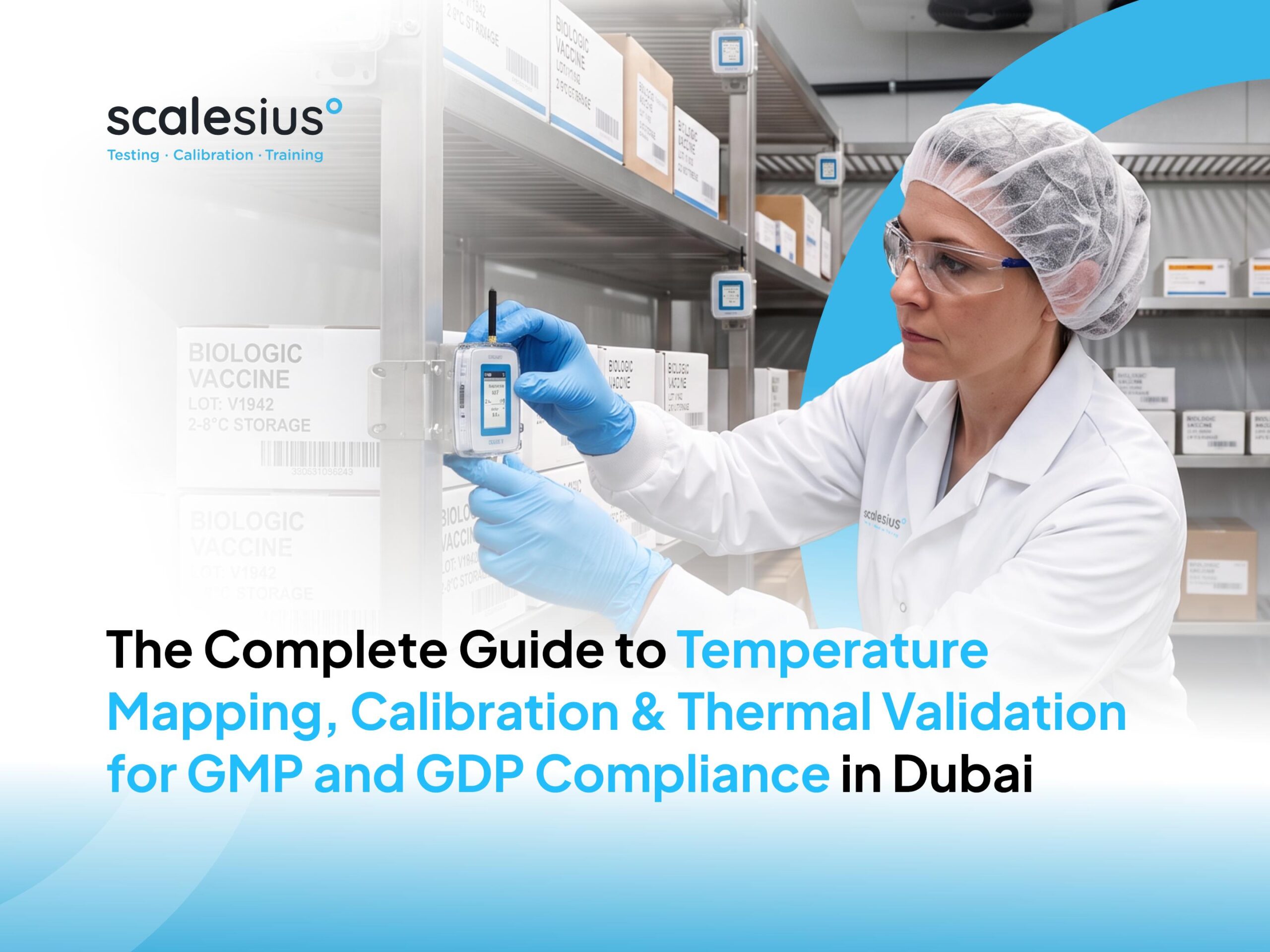
How do you know that your facility is truly keeping products safe?
This guide by Scalesius breaks down temperature mapping, calibration, thermal validation to help your business spot temperature risks and stay ready for regulatory inspections.
A cold room can display the correct temperature, while a product that's stored three meters away experiences something entirely different. This is why GMP compliance and GDP compliance in Dubai cannot depend on a single reading. In Dubai's temperature-sensitive facilities, the evidence that your storage conditions are fine matters as much as the actual conditions themselves.
So how can you prove that a pharmaceutical warehouse, laboratory, hospital pharmacy, or a logistics facility can protect products consistently?
Scalesius helps organisations better understand their facilities as we bring environmental assessment, calibration, and thermal validation together. Our team verifies measurements and documents performance across operations to ensure that all practices are compliant with the regulations.
The Emirates Drug Establishment reported more than 568 regulatory inspections of medical warehouses across the UAE during the first part of 2026 (Source:- Emirates Drug Establishment). This statistic makes the need for regulatory discipline clear. Environmental parameter controls need to be demonstrable, traceable, and inspection-ready for organisations aiming for GMP and GDP compliance.
The Essentials of Reliable Temperature-Controlled Storage for Cold Chain Compliance
A temperature controlled facility is only as reliable as its least controlled area. A sensor in the center of the room might display 5°C while an area near doors or by the upper rack could experience different temperature variations.
This is why temperature mapping matters. Likewise, several interconnected factors ensure that your products are actually within suitable conditions in the facility.

- Environmental conditions remaining constant
It should always ensure that the storage facility is able to maintain the temperature range requirement
- Air flow and thermal distribution
Knowing how air and temperature distribute in space could be helpful in determining any possible thermal hazards.
- Proper storage layout
The arrangement of the equipment racks and products may affect the distribution of air and temperature. Even minor changes to this layout can affect previously established temperature conditions.
- Reliable measuring and monitoring
Temperature readings are only useful when monitoring devices are appropriately selected, calibrated, positioned and maintained.
- Temperature mapping
Temperature mapping reveals hot spots, cold spots and areas that require consistent monitoring. It helps record conditions across locations and recognise uneven temperatures present throughout the facility.
- Ongoing Documentation and Review
Temperature control should be supported by appropriate documents and periodic review. Such evidence provides assurance that your environment is still conducive despite changes in processes.
The goal of cold chain compliance is not simply to record the required temperature. On the contrary, it is to demonstrate that your facility is operating with consistent conditions and a controlled environment.
Ready to take control of your temperature-sensitive facility?
Get in touch with Scalesius at +971 4272 1561 or hello@scalesius.com to strengthen your temperature mapping, calibration, and validation processes..
How Scalesius Supports GDP & GMP Requirements Across Critical Facilities
Reliable temperature control requires organisations to have technically sound calibration, qualification, validation, and data acquisition processes. More than routine monitoring, organisations need to demonstrate that their facilities are performing within the expected criteria.
Scalesius's temperature calibration services help ensure accurate measurements by comparing measuring devices to appropriate references. The process is important since the temperature records form part of the quality documentation.
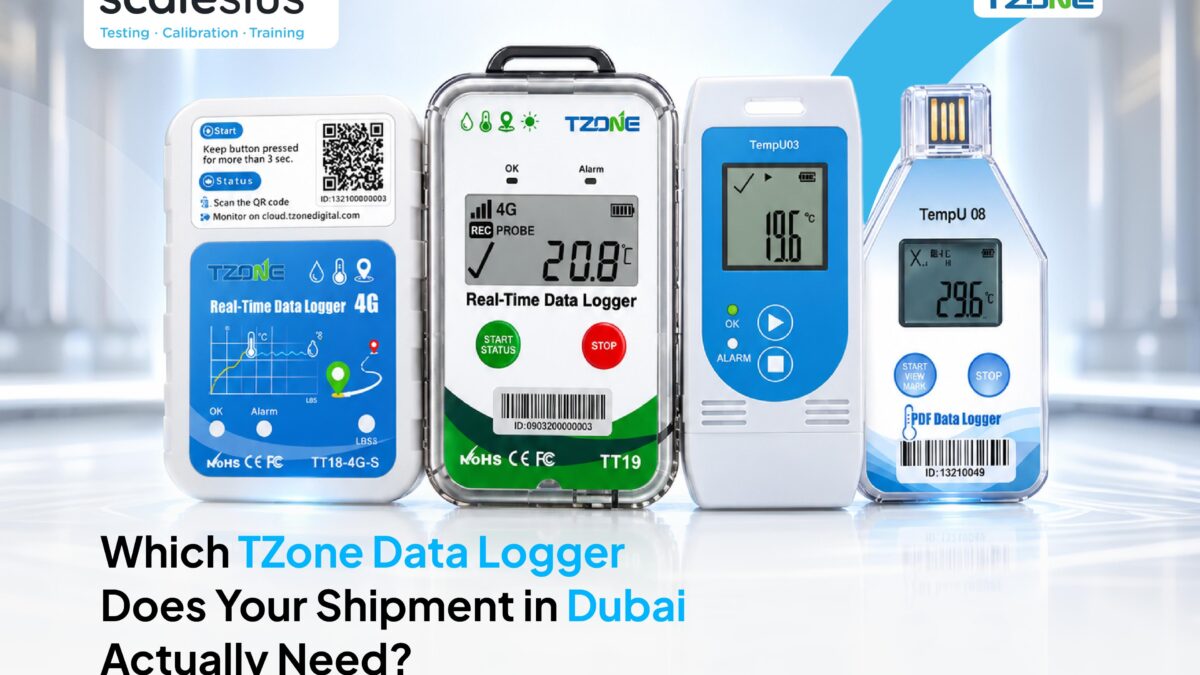
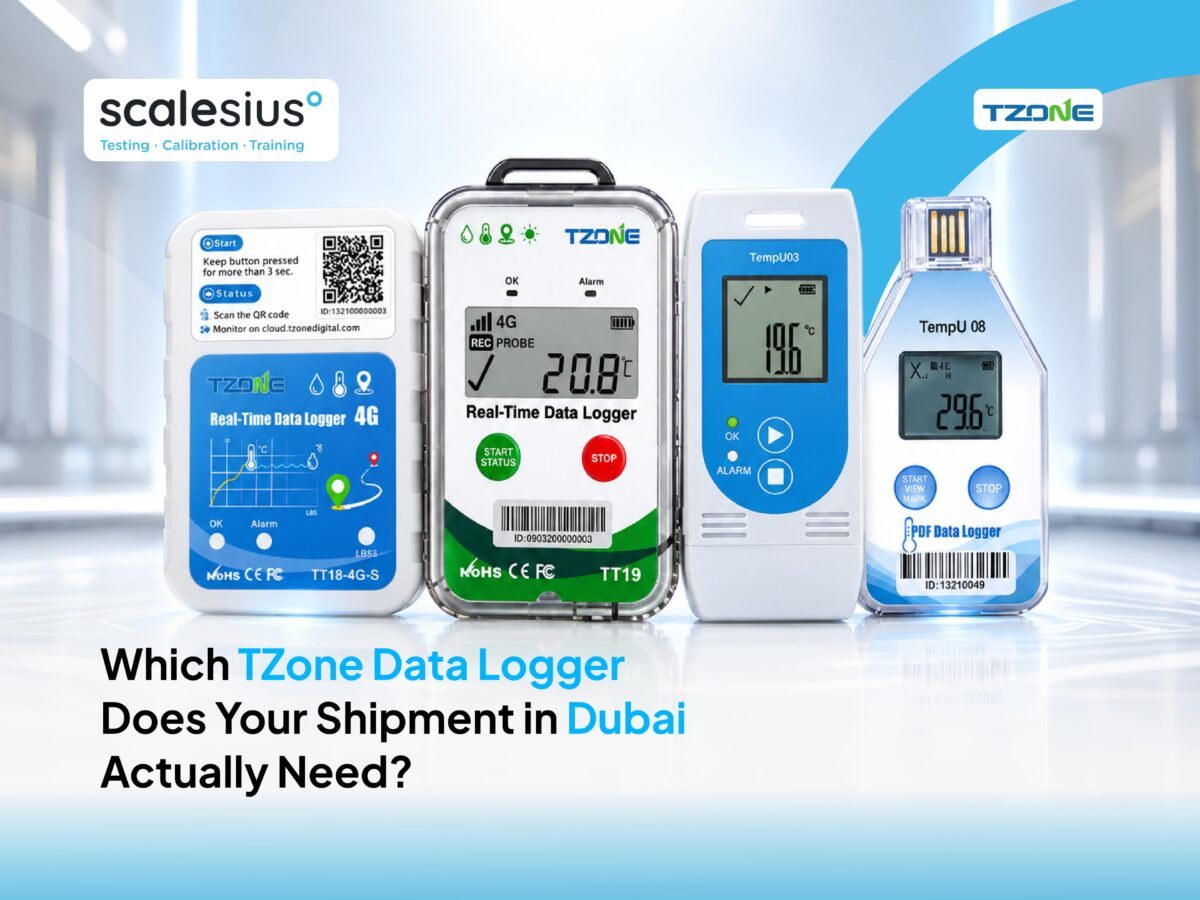
The temperature data loggers can be used to record time-stamped temperature information in environment studies. Such information can be used for temperature mapping, profiling, excursions, and validation.
Our thermal validation services are aimed at ensuring that the temperature controlled environments and equipment are operating according to predetermined specifications. This verification supports qualification for various controlled storage and processing premises.
Scalesius supports temperature critical operations across sectors like :-
Pharmaceutical distribution
Temperature mapping and calibration services help verify temperature distribution and measurement accuracy in GDP aligned operations.
Cold chain logistics
Temperature excursions are promptly identified by expert data logging and thermal profiling across staging, transit and delivery.
Food storage and transportation
Thermal variations and the reasons behind them are assessed using cold room mapping and monitoring.
Healthcare and laboratories
Calibration, environmental monitoring, and validation support temperature-controlled storage for vaccines, specimens and other sensitive materials.
Warehouses and supply chains
Factors such as inventory levels, racking configurations, airflow, and equipment placement can be evaluated through thermal assessment.
The EDE certificate of compliance with good practices specifies 10 working days for inspection and 5 working days for certificate issuance. Inspections have to be held and the certificates have to be reviewed each year. Hence, regulatory documentation is also essential for facilities across the UAE (Emirates Drug Establishment).
For organisations preparing for regulatory inspections or renewals, Scalesius provides expert mapping, calibration, monitoring, and validation services. These records provide technical evidence that temperature-controlled operations within your facility have been assessed and maintained as per standards.
Making Quality and Regulatory Readiness a Continuous Priority
Temperature controlled facilities constantly change. The rack design changes, and refrigeration equipment is upgraded as occupancies change. Each alteration will impact the thermal performance of that area. This is why reassessment needs to be done periodically to ensure regulatory compliance.
This is where Scalesius comes in as a crucial player in your quality control program. We enable organisations to detect thermal disparities and measure accurately through our various services such as temperature mapping and validation. Our specialists deliver documented evidence of your system's performance across controlled operations.
The need for continued control is significant. Vaccine wastage associated with storage outside their temperature thresholds can reach up to 50% globally. It is to be noted that minute deviations of 1°C to 2°C affect sensitive products like insulin or biologics. (Source: Temp Pack Control)
For organisations maintaining GMP compliance and GDP compliance in the UAE, waiting until an inspection happens is not a robust strategy. A periodic verification at certain intervals has to be added to your quality processes.
Ready to strengthen your temperature control program? Establish reliable technical evidence today with Scalesius. We'll help assess your environment, validate thermal performance and verify the efficiency of your measuring devices. Scalesius helps you keep your temperature control operations ready for tomorrow's regulatory requirements.
Ready to take control of your temperature-sensitive facility?
Get in touch with Scalesius at +971 4272 1561 or hello@scalesius.com to strengthen your temperature mapping, calibration, and validation processes..