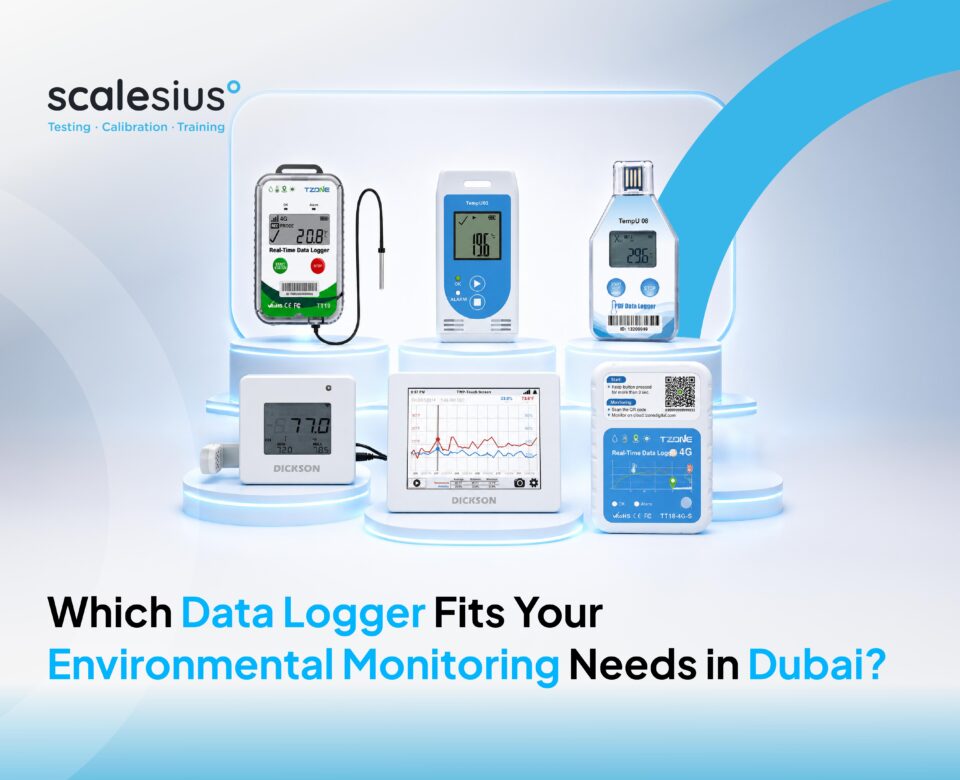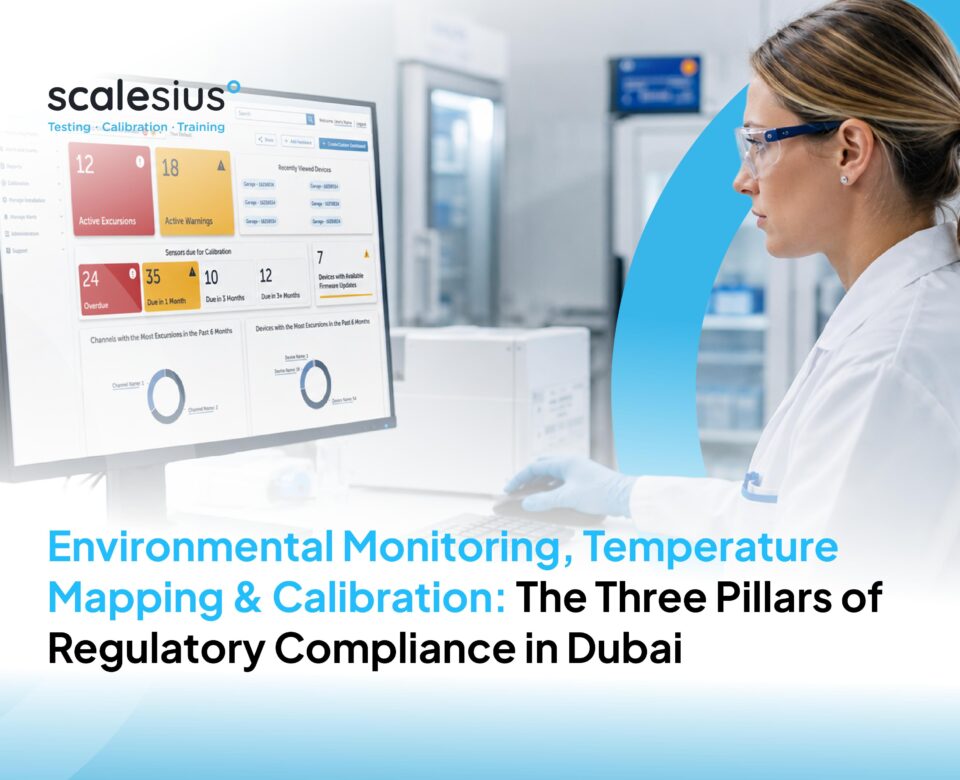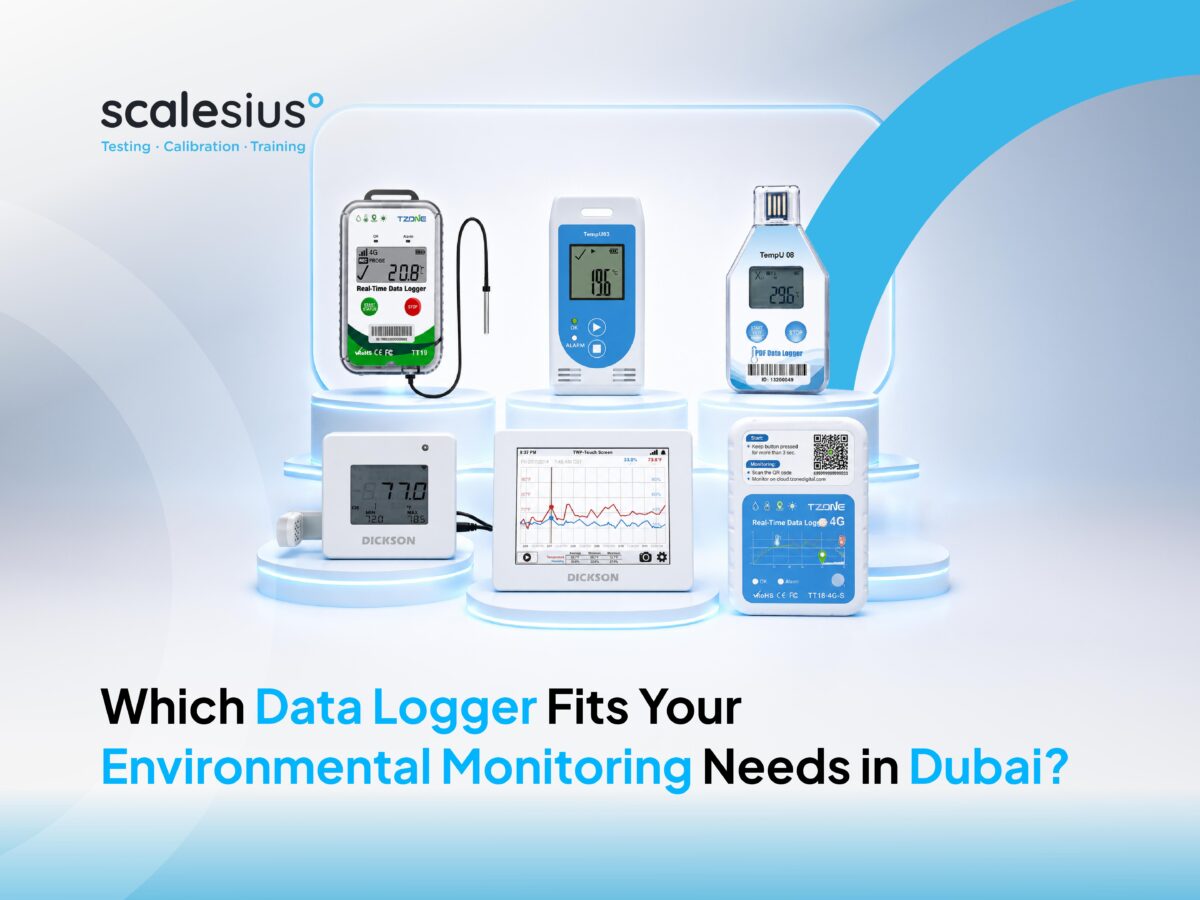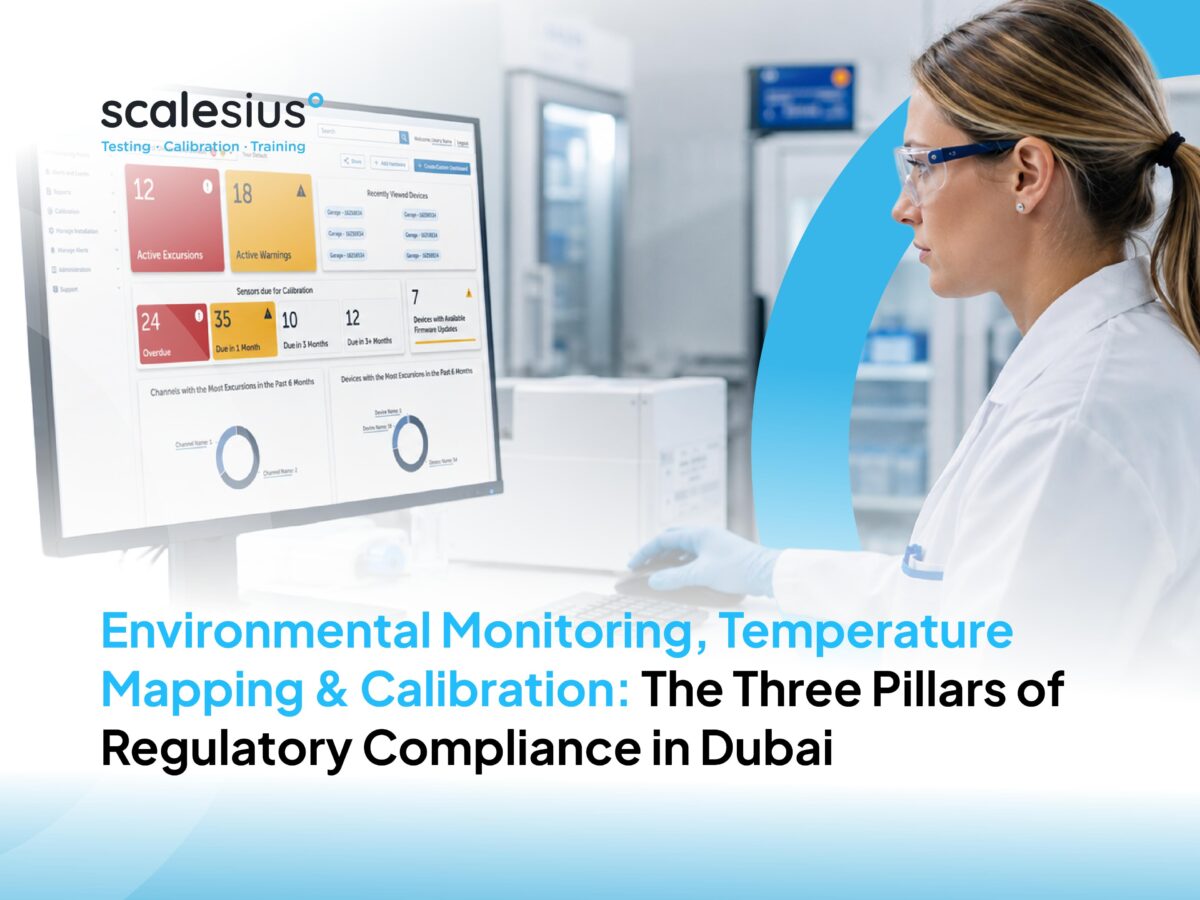


Which Data Logger Fits Your Environmental Monitoring Needs in Dubai?
September 4, 2026

Is one temperature reading really enough to protect your pharmaceutical facility?
Discover how Scalesiu's temperature mapping in Dubai uncovers hidden hot spots, cold spots, and temperature variations—turning assumptions into accurate, actionable data.
What if the one reading on the wall-mounted display that your team has always trusted is the least reliable thing in the room?
Somewhere behind a rack of stacked pallets, the temperature can be climbing past its validated range every single afternoon, hour by hour. A hot spot can remain hidden in a corner that the cooling system's airflow never quite reaches. All the while, the display monitor near the door can still show a temperature within the acceptable range. There are no flags to report, just a slow and silent excursion that nobody expects.
This is one blind spot that pharmaceutical temperature mapping in Dubai is particularly designed to eliminate. Additionally, this is something that Scalesius has uncovered in multiple cold chain facilities across Dubai. This is not because teams were careless. A single sensor was never built to describe an entire room, especially not in a city where heat pushes past 40°C.
The UAE pharmaceutical market was valued at USD 4.45 billion in 2025 and is projected to reach USD 8.59 billion by 2034, with Dubai alone commanding the largest regional share at 39.7% (Source: IMARC). The statistics illustrate how facilities cannot afford any blind spots within their temperature controlled premises.
This blog explains what your storage environment can look like before Scalesius maps it and what changes the moment that we do.
Why “Within Range” Does not Always Indicate Uniform Temperature Control
Before - Your temperature records may rely heavily on one display, one door-side logger, and one or two readings. This type of setup can leave parts of a warehouse underrepresented. On a specification sheet, it looks airtight. In reality, a GDP compliant storage area can have an overall average temperature within range while individual zones differ outside it.

Here's what a single fixed point in temperature mapping typically fails to catch -
-
Micro hot spots near loading bays or refrigeration equipment. This is where heat can accumulate and create temperature variations.
-
Cold spots directly under vents or air returns, where products can sit colder than intended without anyone noticing.
-
Recovery lag after door opening, with thermal fluctuations occurring dozens of times during a shift, especially during peak dispatch times.
-
Seasonal drifts, where temperature profiles can differ between cooler and hotter months.
-
Since the hot air rises and cool air sinks, stratification happens. This means the same shelves at different heights can display two different temperatures.
The stakes are significant here. Pharmaceutical products can arrive damaged or be compromised somewhere during the whole distribution process. Biologics and vaccines take the hardest hit, with a significant share arriving already degraded. Reports suggest that 50% of vaccines are wasted globally because the cold chain breaks down during transport or storage (Source: Tempk).
Quality engineers or business owners have to ask themselves whether their current setup proves the whole facility performs to the specification, or just proves one corner of it does.
Every degree your facility hasn't measured yet is a risk you haven't noticed.
Call Scalesius at +971 4272 1561 or write to hello@scalesius.com to map every corner your last audit never saw.
What Changes When Scalesius Maps Your Pharmaceutical Facility?
After - Assumptions get replaced with defensible and location by location evidence. This is where "we think we are compliant" becomes "here's the data that proves it".
Our experts treat the mapping engagement as a structured qualification study rather than simply a quick sensor assessment. Our team reviews the access points, racking configuration, HVAC zoning, and existing sensor placement before anything is actually installed.
-
Multi-point and multi-height deployment - Calibrated data loggers are placed in the zones and areas that are most likely to result in temperature fluctuations. This includes the ones your current setup never covered.
-
Extended capture window - We assess a pharmaceutical facility as a whole, taking into account both peak summer load and other cooler conditions.
-
Full environmental profiling - Temperature and humidity are logged together, since moisture is as capable as heat in compromising a batch's integrity.
-
A documented qualification report - Our team provides proper logger placement diagrams with temperature and humidity curves and statistical outputs. The experts at Scalesius map hot spots and cold spots present in a facility to provide clear recommendations.
-
Device placement and calibration - Once the risk zones are identified, Scalesius installs the relevant monitoring devices in exactly the locations where they are needed the most. Our team calibrates each device, so the readings your team relies on from day one are precise.
Pharmaceutical temperature mapping in Dubai cannot rely on a generic template based on a single climate type or premise.
For example, a UAE pharma facility could experience logging excursions during loading and unloading processes. The fixed monitor would still be showing temperature within an acceptable range. In such a situation, Scalesius maps the space and isolates which zones are destabilised during high traffic windows. Our experts handle the facility's excursions and keep it audit-ready with proof of exactly where and why they happen.
Scalesius ensures that your facility can be benchmarked against GDP, ISO, UAE MOH and DM expectations. This gives your quality team confidence that your facility is prepared for regulatory inspections and audits.
Turn Temperature Insights Into Smarter Facility Decisions
A mapping report is only as valuable as what happens after it lands on your desk. Scalesius doesn't just hand over a document, it helps you act on it. Once the hot spots and cold spots are identified, Scalesius helps place the monitoring devices exactly where the data shows they are needed. Our team calibrates instruments to make sure that every reading you get is accurate and audit-ready.
The environmental mapping data we provide also makes it easy for distributors running multiple sites to see which warehouses handle the heat best and which one needs an HVAC investment. These are insights that a standalone temperature and humidity monitor can't offer without proper device placement and calibration behind it.
80% of warehouses still operate without automation, relying on manual spot-checks long after the technology to do better became available (Source: The Network Installers). Our team closes that gap. This is what sets Scalesius apart in pharmaceutical temperature mapping in Dubai. We don't just identify the risk. We close the loop with correctly placed, calibrated and monitored devices. This turns compliance data into an operational advantage for your facility.
Every degree your facility hasn't measured yet is a risk you haven't noticed.
Call Scalesius at +971 4272 1561 or write to hello@scalesius.com to map every corner your last audit never saw.