


How Does Scalesius Keep Your Business Audit-Ready for Food Safety Compliance in Dubai?
July 3, 2026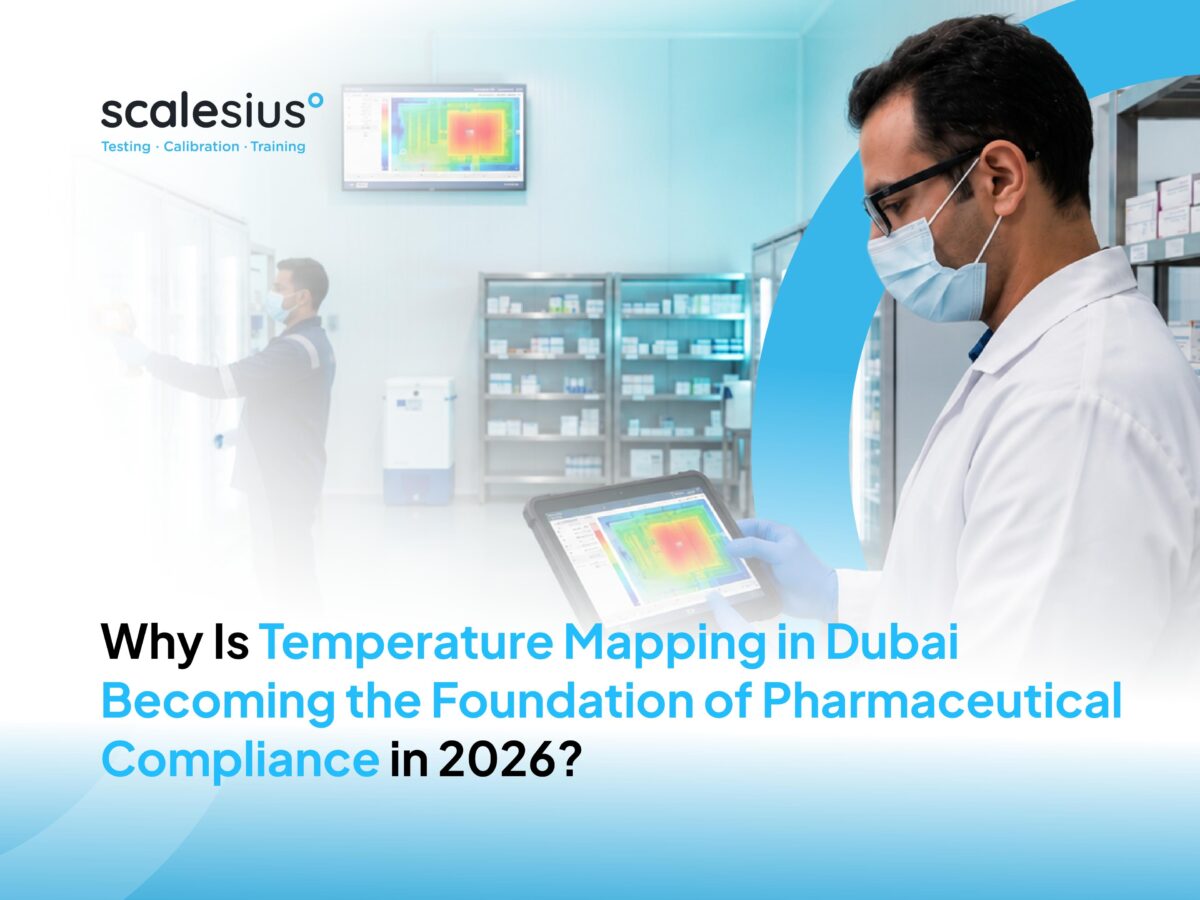
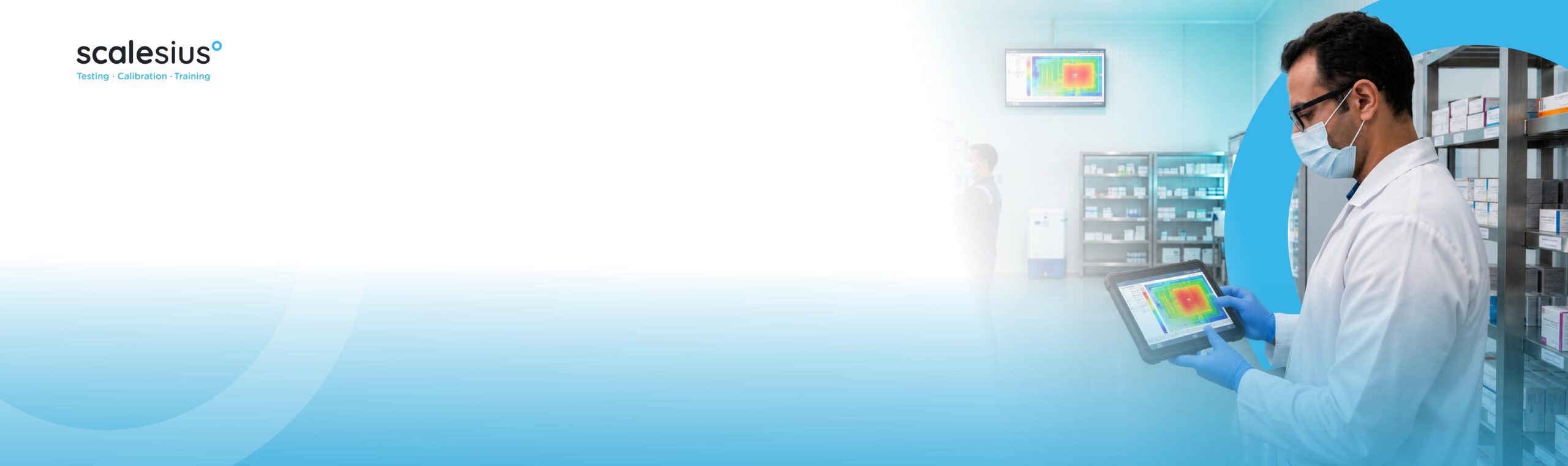
The regulation of pharmaceuticals in Dubai is not only about the usual process of monitoring in 2026. Find out how temperature mapping can assist you in identifying unknown temperature hazards in your warehouse.
Many facilities assume the answer is yes, but actual temperature mapping data tells a different story. Sensors placed near the entrance may not detect conditions behind tightly packed shelves. A wall mounted thermostat cannot detect if a cold pocket is beginning to form. Additionally, a warehouse that performs perfectly today can become unstable as temperatures change rapidly in Dubai's peak summer months.
This is why temperature mapping in Dubai is considered critical. It is one of the strongest indicators of pharmaceutical compliance and product integrity, and has evolved beyond a basic regulatory requirement.
Every temperature fluctuation inside a warehouse creates a footprint. These footprints often remain hidden until a comprehensive mapping study discovers them. Even the smallest variation like changing airflow patterns or loading practices can create risks. Routine monitoring fails to detect these.
By mapping confidence across every cubic meter, Scalesius make the difference here. We help pharmaceutical businesses gain stronger compliance and better risk management by understanding the true geography of stability within their facilities. This way, you have the confidence that every product is stored exactly as intended.
Why Thermal Mapping Has Become Essential for Pharmaceutical Compliance
Compliance is not about recording a temperature on display. It's about consistently proving that a storage environment is performing within the validated limits. After all, how can a pharmaceutical business guarantee quality if the environment surrounding it is not validated and secure?
Thermal mapping changes the pace at this point. Temperature mapping in pharma industry is not the same as ordinary monitoring. It assesses all possible temperature variations that could occur at any point within the facility. It brings out subtle differences that an ordinary sensor would easily miss. This gives your business the upper hand by transforming assumptions into measurable evidence, thus letting you make informed decisions.
The warehouse temperature mapping performed by Scalesius across critical environments includes
- Validating storage temperature to ensure that it stays between 2°C and 8°C for vaccines, biologics, and other temperature-sensitive medicines.
- Verifying that frozen storage conditions remain consistent between -25°C and -15°C, ensuring controlled temperature storage for ultra-low temperature environments under ICH stability guidelines.
- Assessing manufacturing spaces and stability chambers helps ensure products remain protected throughout the cold chain. Additionally, pharmaceutical transport environments should also be carefully evaluated.
Our expert team stays updated with WHO's recommendation of conducting mapping studies. Extending the temperature mapping process across 7 to 10 consecutive days provides a clearer understanding of environmental conditions. (dicksondata.com). The results support audits. It safeguards pharmaceutical quality in every way while reducing operational risks for your business.
How Scalesius Maps Confidence Across Every Cubic Metre While Capturing Temperature Footprints
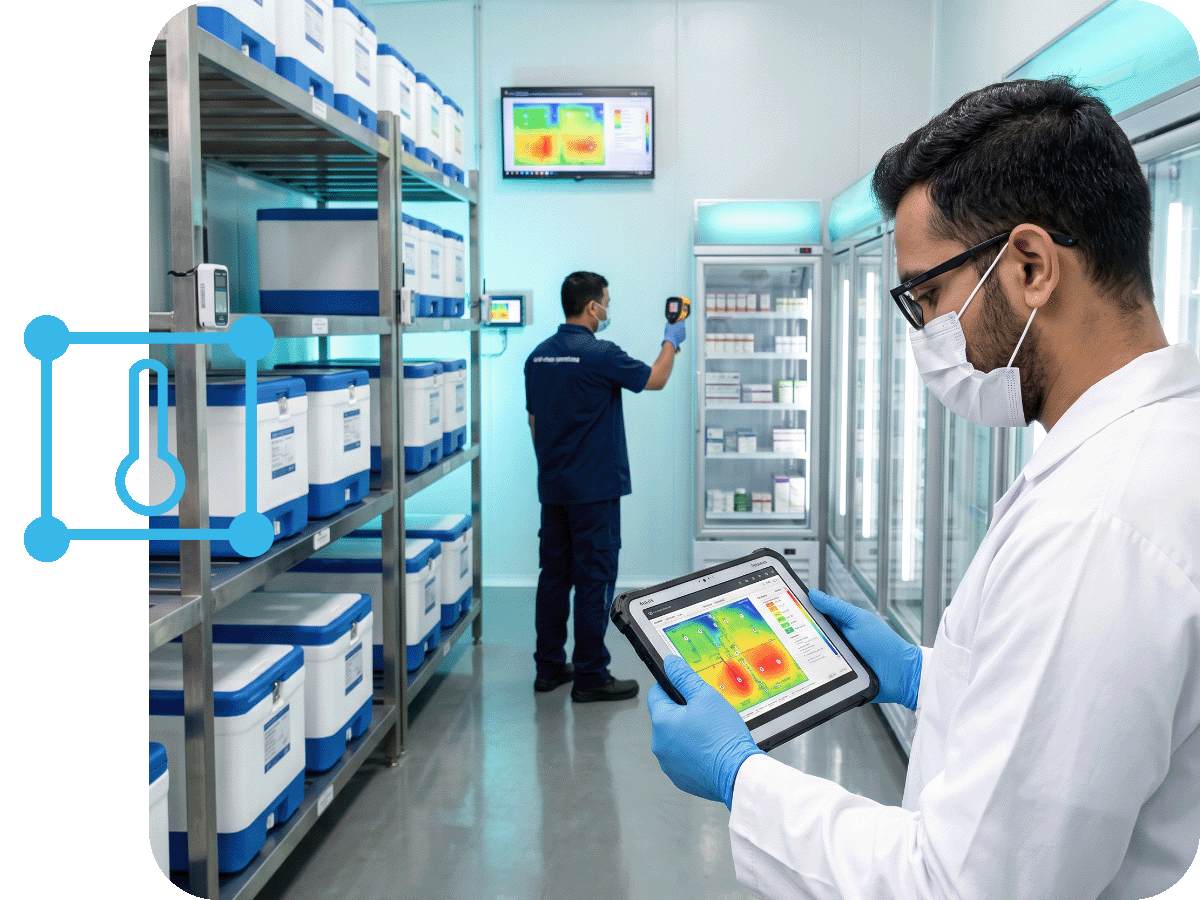
Every temperature fluctuation that happens leaves a footprint. These can appear insignificant, but they often create hidden hot spots and cold spots. These unstable zones can compromise the integrity of the pharmaceutical products. We capture these temperature footprints by using advanced data loggers and a mapping methodology. This comprehensive analysis ensures that the correct performance of the environment is portrayed. It is ensured that there is real-time monitoring by installing the cold chain monitoring system in the correct place by conducting extensive mapping analysis.
All the mapping studies that we perform comply with the temperature mapping protocol. This is done in accordance with the pharma guidelines in compliance with international standards.
We place calibrated data loggers at specific locations and at multiple heights. This can be within storage racks, entry points or airflow paths. These are the most critical locations that help us capture accurate environmental conditions.
Full coverage of space
cubic meters are evaluated through our warehouse temperature mapping process. This will help us to detect variations and doesn't solely depend on a few readings.
Capturing every temperature footprint
Continuous temperature mapping is essential when assessing refrigerated environments. This is because normal temperature checks often fail to detect if a drawback is present. On the contrary, practicing continuous monitoring reveals the recurring fluctuations so that you can take the needed precautions.
Data-driven risk identification
The data that we collect pinpoints hotspots, cold spots, and unstable zones. This allows us to form a corrective action plan to ensure the product quality is not affected. Audit-ready documentation The detailed reports that we provide include objectives, methodology, mapping results, and recommendations. This helps businesses keep up with compliance during inspections and regulatory audits.
Beyond warehouses, Scalesius supports pharmaceutical businesses that continue to understand the true geography of stability. By mapping every cubic meter of your facility, we ensure that your stability chambers, processing areas and refrigerated transport vehicles are perfectly stored.
Strengthen your cold chain compliance with a trusted calibration partner like Scalesius. Contact us today at +971 4272 1561 or write to us at hello@scalesius.com.
Applying Temperature Mapping Guidelines to Identify Hot Spots, Cold Spots, and Hidden Risks
Collecting temperature data through mapping is only the first step. The real challenge lies in proving that every storage environment is performing consistently according to UAE expectations. Scalesius doesn't treat a warehouse as a controlled space. We evaluate each environmental zone independently. This strengthens the mapping results and allows us to convert findings into practical actions that improve pharmaceutical temperature mapping compliance.
In accordance with UAE Good Storage Practices (GSP), temperature monitoring devices should be positioned in areas most likely to experience fluctuations. A validated mapping plan must be developed, and the study should demonstrate uniform temperature distribution throughout the facility. Before the monitoring process begins, the entire storage facility or refrigerated vehicle is assessed to ensure that all conditions support effective mapping.
Scalesius follows a systematic mapping approach that includes:
-
Validation Planning and Protocol Development
Every study begins with a documented mapping protocol designed to create a fully traceable validation process by defining the scope, objectives, methodology, sensor layout, and historical data requirements. -
Facility Risk Assessment
Critical environments such as ambient warehouses, cold chain transport vehicles, and cold rooms are assessed to determine mapping requirements. Factors considered include operational workflow, product sensitivity, and regulatory expectations. -
Environmental Qualification
Mapping data is used to identify hot spots and cold spots. This process verifies uniform temperature distribution and confirms that controlled environments continue to operate within validated limits. -
Deviation Analysis and CAPA Recommendations
Any temperature deviations identified during the study are analyzed to determine the root cause. Corrective and Preventive Actions (CAPA) are then recommended to improve compliance and strengthen audit readiness. -
Qualification Reporting and Regulatory Readiness
A comprehensive mapping report containing study findings, validation outcomes, and technical recommendations is provided as documented evidence of ongoing pharmaceutical compliance.
Scalesius combines internationally recognized temperature mapping practices with UAE Good Storage Practice expectations to create validated storage environments that protect product quality and integrity.
The outcome of our mapping studies extends beyond an audit-ready report. Organizations gain practical insights that support business decisions, strengthen compliance, and build confidence throughout the cold chain through professional temperature mapping services in Dubai.
Building Future-Ready Pharmaceutical Compliance with Scalesius
Can you confidently say that every corner of your pharmaceutical storage facility is performing exactly the way it should?
In 2026, this question should not be left unanswered. Otherwise, businesses may face significant disruptions in their supply chain operations. Cold chain logistics is an industry where every degree influences product quality and every audit demands clear evidence that products are stored under the correct conditions. In such an environment, assumptions are not enough.
Success belongs to organizations that act before disruptions occur in real time. These are the pharmaceutical companies that understand their risks, validate their environments, and make informed decisions based on reliable data obtained through comprehensive temperature mapping studies. This proactive approach helps prevent costly delays and compliance issues.
For pharmaceutical companies operating within the UAE, compliance expectations continue to rise in line with Article 160 of the UAE Pharmaceutical Law. Cold chain failures related to pharmaceutical storage and warehouse infrastructure can result in warnings, license suspensions, cancellations, or financial penalties. The most effective way to avoid these risks is to stay ahead of compliance requirements through validated environmental monitoring and temperature mapping.
As specialists in temperature mapping in Dubai, Scalesius continues to redefine pharmaceutical compliance standards across the UAE.
Scalesius delivers more than just validated reports. We map with confidence across every cubic meter, identify every temperature footprint, and help organizations build storage environments that are prepared for the future.
Strengthen your cold chain compliance with a trusted calibration partner like Scalesius. Contact us today at +971 4272 1561 or write to us at hello@scalesius.com.